
How Do Porta Potties Work?
The setup is simpler than people expect. Underneath the seat sits a holding tank, 60 to 70 gallons on a standard unit, built into a shell that stands about 92 inches tall and measures roughly 44 by 48 inches on the ground. There's no water line and no flush handle on the basic model. Waste drops into the tank and mixes with a liquid treatment, the same blue chemical people mean when they search portable toilet chemicals near me. That chemical does two jobs: it breaks down solids and it masks odor between service visits. A vent stack pulls sewer gas up and out through a filtered pipe instead of back through the seat. Independence Porta Pros services each unit on a rotation, and the industry baseline from ANSI/PSAI Z4.3 is one visit per week for up to 10 users across a 40 hour week. Busy sites or weekend events often need more frequent stops, which is why placement and headcount both matter. If you're still working out numbers, our guide on how many units you need walks through the math before you call.
How Do Flushable Porta Potties Work?
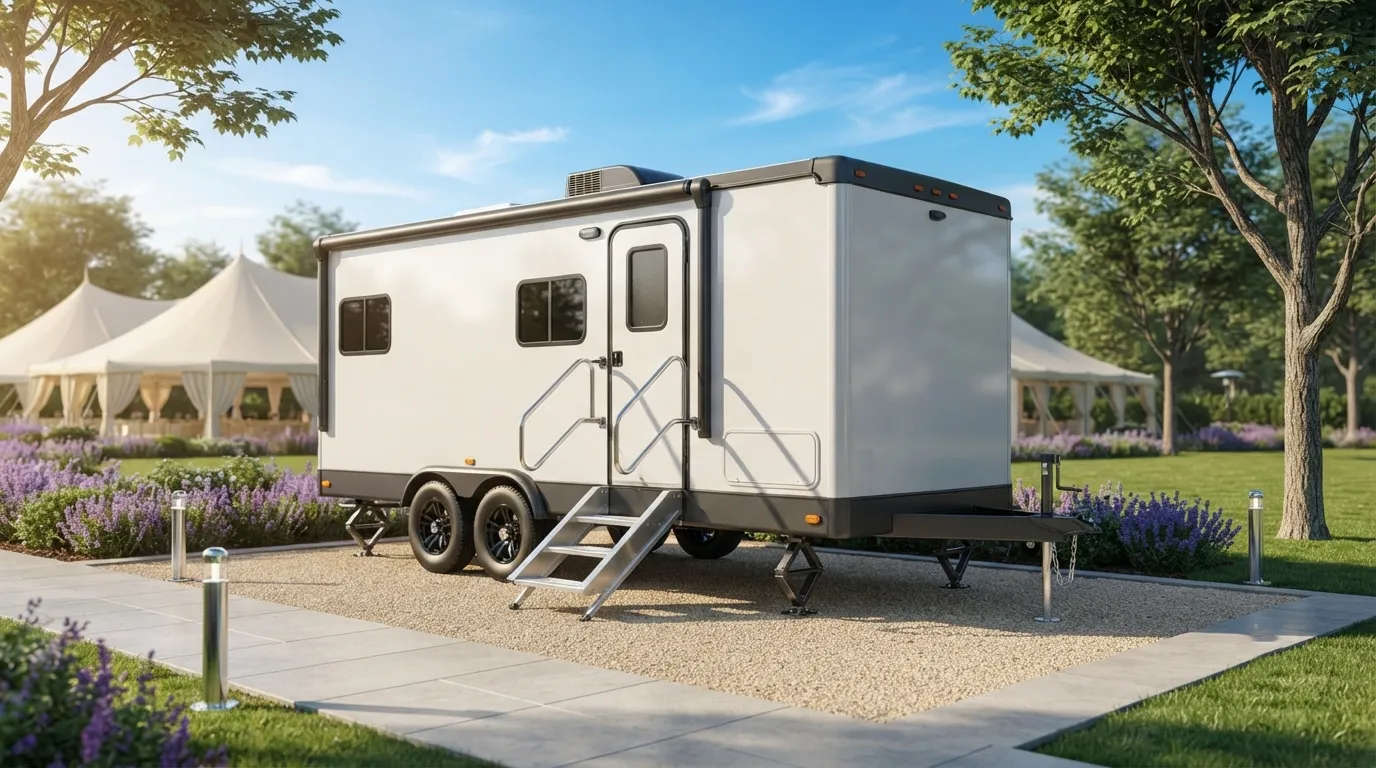
A deluxe flushable unit adds a small onboard freshwater tank and a foot pump or hand pump that pushes a rinse of water through the bowl after each use. It still drains into the same style of holding tank underneath, just with a bit more water mixed in, so service intervals can run slightly tighter on high-traffic events. These units are common at weddings and corporate functions where guests expect something closer to a real bathroom. Some also include a small sink built into the unit, separate from a standalone portable sink rental, which draws from its own onboard reservoir rather than a piped water source. For anything needing multiple stalls, mirrors, and running water at a sink bank, a full restroom trailer rental is the next step up, and Independence hosts enough events each season that trailers get booked out fast around graduation and festival months.
How Does a Portable Sink Work?
A portable handwashing station runs on the same no-plumbing logic as a porta potty, just built around water instead of waste. Fresh water sits in an onboard tank, gravity or a foot pump pushes it through the faucet, and a separate gray water tank underneath catches the runoff. Soap and paper towels come standard because hand sanitizer alone doesn't meet the requirement in 29 CFR 1910.141(d)(2), which calls specifically for soap and towels or a hand-drying device. On job sites, this matters beyond comfort. OSHA 1926.51(f)(1) requires washing facilities where crews are applying paints, coatings, herbicides or insecticides, so a picture of a construction worker running to a porta potty only tells half the story if that same crew is spraying chemicals and has no sink nearby. A handwashing station rental solves that gap, and our page on the requirement itself breaks down when it applies.
How Do Camping Porta Potties Work?
Camping and remote-site units work the same way as a job site unit, just scaled for lower traffic and longer stretches between service. A single unit can reasonably cover a small group over a weekend before it needs pumping, though longer stays or larger groups push that timeline. Placement matters more outdoors: units need stable, level ground, and a roll-off or service truck typically needs about 60 feet of straight clearance to access and pump a unit parked at a campsite or rural property. For farms and agricultural operations around Independence, OSHA 1928.110 sets a separate standard: field sanitation rules call for one facility per 20 hand-labor employees, reachable within a quarter mile walk. That's a different bar than a construction crew under OSHA 1926.51(c), which scales from one toilet for 20 workers or fewer up to one seat and one urinal per 50 workers at 200 or more. Our farm and agricultural restrooms page and construction site services page both cover the specifics for each setting.
Pricing Snapshot
| unit | day | week | month |
|---|---|---|---|
| standard | $100-$350 | $130-$500 | $125-$325 |
| deluxe | $85-$1,200 | $150-$290 | -- |
| ada | $200-$400 | $240-$400 | -- |
Rates vary by unit type, rental length, and how far Independence Porta Pros has to travel. Full breakdowns live on our porta potty rental cost, per-day rate, and monthly rental pages.
Do porta potties need a septic tank connection?
No. A porta potty is fully self-contained, unlike a home's septic system where a 1,000-gallon tank typically gets pumped every 3 to 5 years. There's no pipe running to a leach field. If you're comparing the two for a property near Independence, our septic pumping service page covers how a fixed system differs from a portable one.
How often does a porta potty get serviced?
The baseline under ANSI/PSAI Z4.3 is once a week for light use, but job sites near Blue Springs or events drawing large crowds often need two or three visits weekly. Check how often porta potties are cleaned for details on what a service visit actually includes.
Do porta potties smell if they're serviced on time?
A well-serviced unit shouldn't smell strongly. The chemical treatment and vent stack are designed to control odor between pumpings. Heat, overuse, and skipped service intervals are the usual causes when a unit smells bad. Our do porta potties smell page covers the causes in more depth.
Are porta potties required to be ADA accessible?
Yes, in clusters. ADA Standards section 213.2 requires at least 5 percent of clustered single-user units to be accessible, with a minimum of one. Our ADA accessible porta potty page explains sizing and placement.
What's the difference between a standard unit and a porta john?
They're often the same product under different names. A porta john rental and a standard portable toilet rental both describe the basic no-flush unit used on most job sites around Independence and out toward Grain Valley.
Next step
Get a delivery date
Tell us the address, the dates and the headcount. We size the order and confirm the route.