
How many restrooms does a county fair need in Independence?
Start with your busiest single day, not your average day. If Saturday brings in 4,000 people, you're planning for that number, not the weekly total. Our guide on how many porta potties you need walks through the math event by event, but the short version for a fair: one standard unit per 75 to 100 attendees during peak hours, with extra units near food vendors and grandstands where lines cluster hardest. ADA Standards section 213.2 requires that where single-user units are grouped, at least 5 percent be accessible, and never fewer than one. That means even a modest cluster of eight standard units needs an accessible unit sitting right alongside them, not tucked somewhere out of the way. Our ADA accessible porta potty units meet section 404.2.3 for door clearance and section 304.3.1 for the turning circle inside. For fairs running multiple days, standard porta potty rental priced by the week almost always beats booking day rates twice. Placement matters as much as count. Keep units on stable, level ground per ADA Standards section 302.1, away from tent stakes and generator cables, and close enough to midway traffic that people actually use them instead of the tree line, following the same logic laid out in our porta potty placement guide.
What restroom options work best for a multi-day fair?
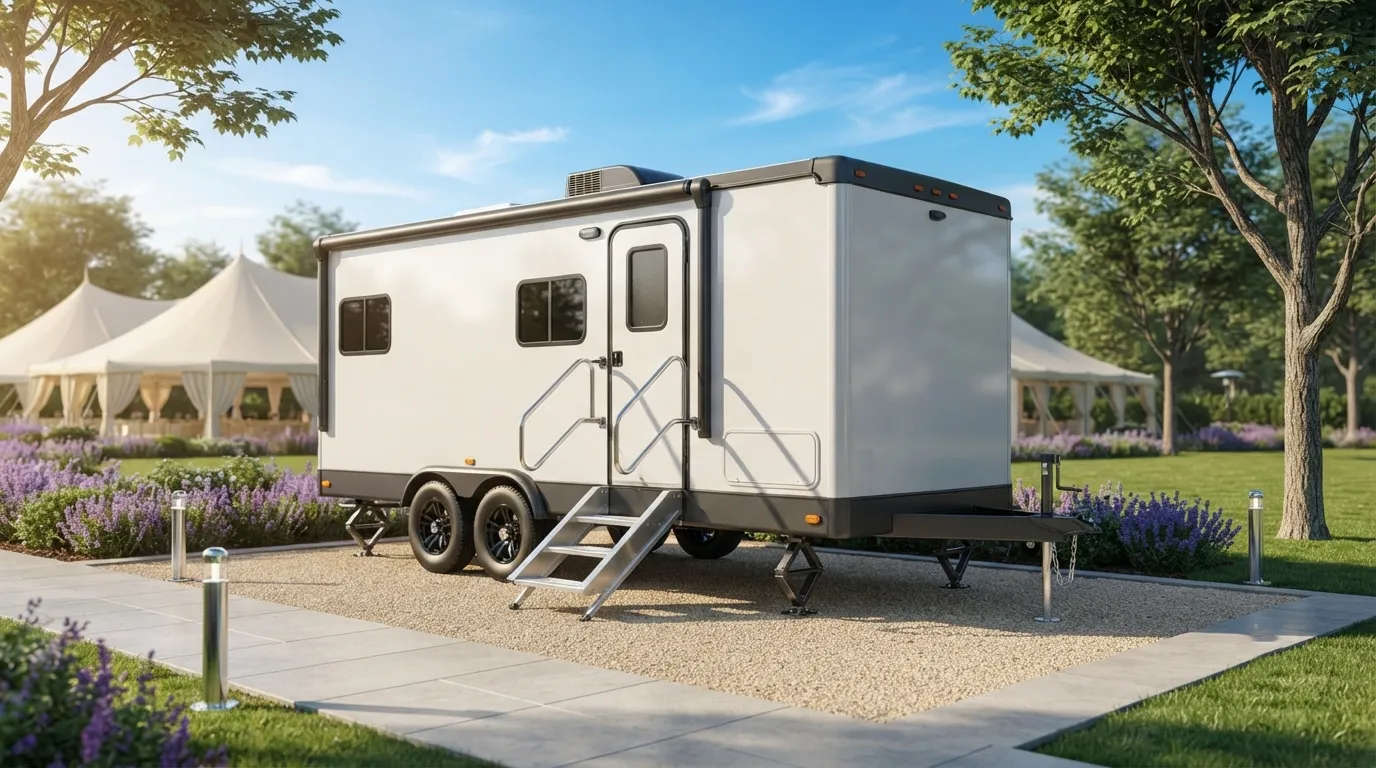
Standard units handle the midway crowd, but a fair with a beer garden, a grandstand, or a VIP area benefits from mixing in something nicer, and a luxury restroom trailer is worth pricing out for sponsor tents. A restroom trailer rental with flushing fixtures and running water changes the experience for vendors and sponsors who expect more than a standard unit. For a fair spanning a weekend, a 4 stall restroom trailer can cover a mid-size crowd without the line buildup you get from single units, and an 8 stall restroom trailer scales up for the main gate area on your biggest day. If budget is tighter, a deluxe flushable porta potty splits the difference, giving guests a flush handle and a sink without the full trailer cost, and our restroom trailer rental cost page breaks down where that tradeoff pays off. Whatever mix you choose, service frequency matters more at a fair than almost any other event type because of continuous foot traffic. ANSI/PSAI Z4.3 sets a baseline of one service visit per week for up to 10 users over a 40 hour week, but a fair running 10 to 12 hours a day for three or four straight days needs service scheduled daily, sometimes twice, not once. Handwashing is its own line item. OSHA 1926.51(a)(1) requires an adequate supply of potable water at any place of employment, which covers your vendor and staff areas even if attendees are covered separately. A row of handwashing stations near food booths keeps vendors compliant and keeps lines at the actual restrooms shorter, and pairing them with a hand sanitizer station rental at gate entrances covers the general public too.
When should fair restrooms be delivered and picked up?
Book delivery for the day before gates open, not the morning of. Fairgrounds get busy fast with vendor setup, stage builds, and truck traffic, and a roll-off dumpster rental delivery alone needs about 60 feet of straight clearance behind the truck, so restroom trucks are competing for the same lanes. Pickup should happen the morning after teardown wraps, once trash haulers and vendor trucks have cleared out, and any temporary fence rental used to keep crowds off equipment staging areas usually comes down on the same schedule. Independence fair sites often run tight on turnaround between events, so locking delivery and pickup windows early avoids a scheduling collision with the next renter. If your fair includes livestock areas or a farm exhibit, check our farm and agricultural restrooms page, since animal areas sometimes call for different placement than the midway. Organizers running fairs that stretch into a county fair circuit covering Blue Springs, 9.4 miles southeast of Independence, or Grain Valley, 12.1 miles southeast, often rent from the same vendor across multiple stops to keep service consistent and avoid re-negotiating delivery logistics each time. A written request a quote submission early in fair planning locks in unit availability before the summer season fills up.
| unit | duration | typical price |
|---|---|---|
| standard | day | $150 |
| standard | week | $200 |
| standard | event | $400 |
| ada | week | $185 |
| deluxe | week | $250 |
How far in advance should we book fair restrooms?
Book 60 to 90 days out for a fair of any real size. Peak summer weekends fill fast, and accessible units and trailers go first. Waiting until a few weeks out risks settling for whatever's left, not what actually fits your layout.
Do we need separate units for vendors and staff?
Yes, if you can manage it. Staff and vendor traffic is steadier through the day, while guest traffic spikes hard around meal times. Separating the two keeps both groups moving and reduces the wait during your busiest hours.
How often are units cleaned during a multi-day fair?
Daily service is standard for fairs, sometimes twice on the busiest day. See our page on how often porta potties are cleaned for the general schedule, then plan extra visits around peak attendance days specifically, and review our OSHA portable toilet requirements guide if you're staffing vendors on site.
Can we add handwashing stations near food vendors?
Yes, and it's worth doing. A run of portable sink rental units near food booths keeps vendors compliant with water access rules and reduces crowding at the main restroom cluster during meal rushes.
What if we need extra units added mid-fair?
Call it in. Most fairs see attendance jump on weekend days versus weekdays, and an emergency porta potty rental delivery can add units fast if Saturday crowds outpace your original count from Thursday planning.
Next step
Get a delivery date
Tell us the address, the dates and the headcount. We size the order and confirm the route.